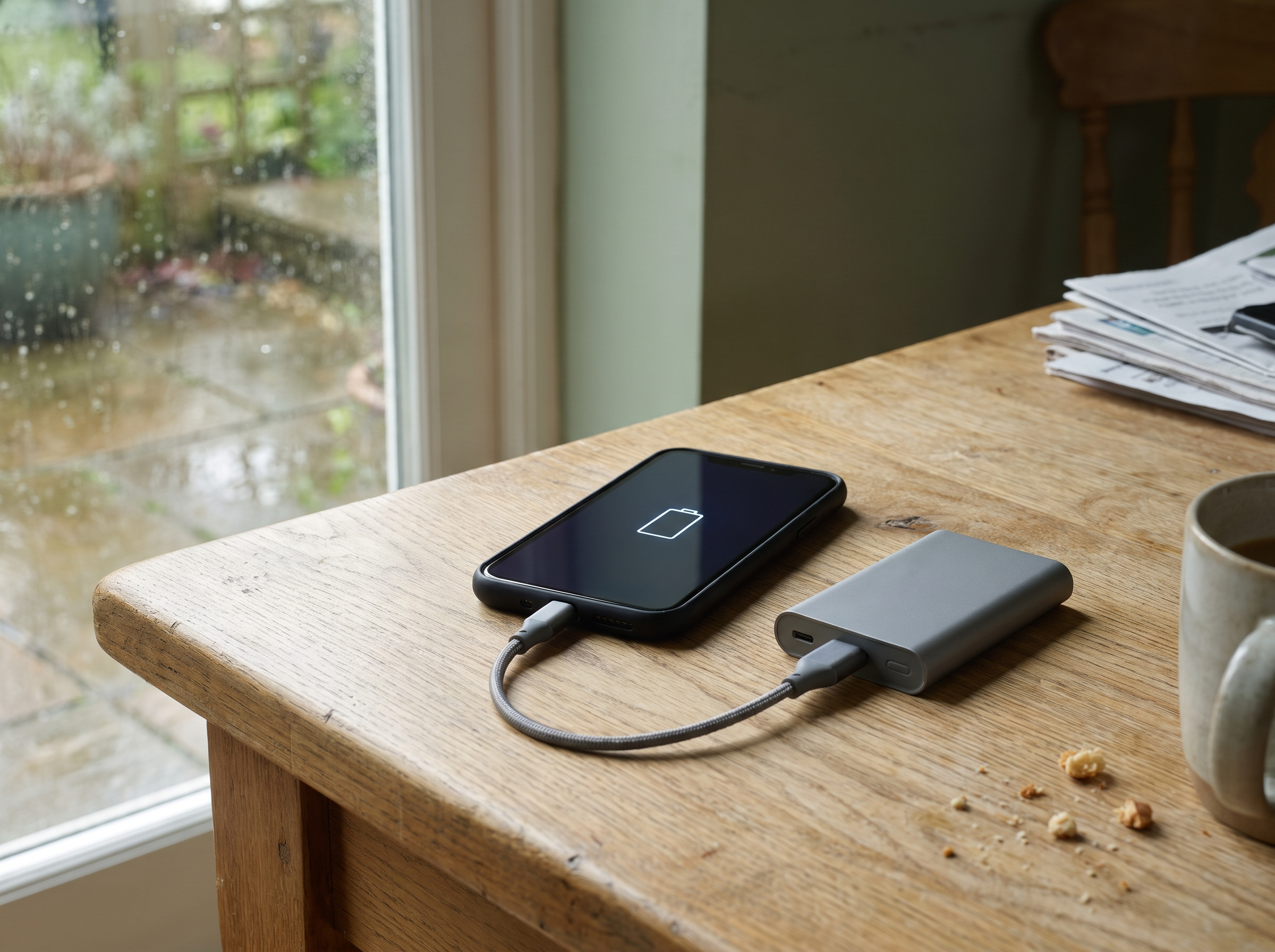
Mobile phones
A compatible USB outlet on the battery can top up a phone for calls, messages and updates when a mobile network is available.

One small solar panel for the essentials at home.
Caregreen is planning a single-panel installation for households that want backup power during a cut. The panel charges a battery in daylight. When you need to make a call, charge a laptop or get online, you can draw on that stored energy.
What could it power? ↓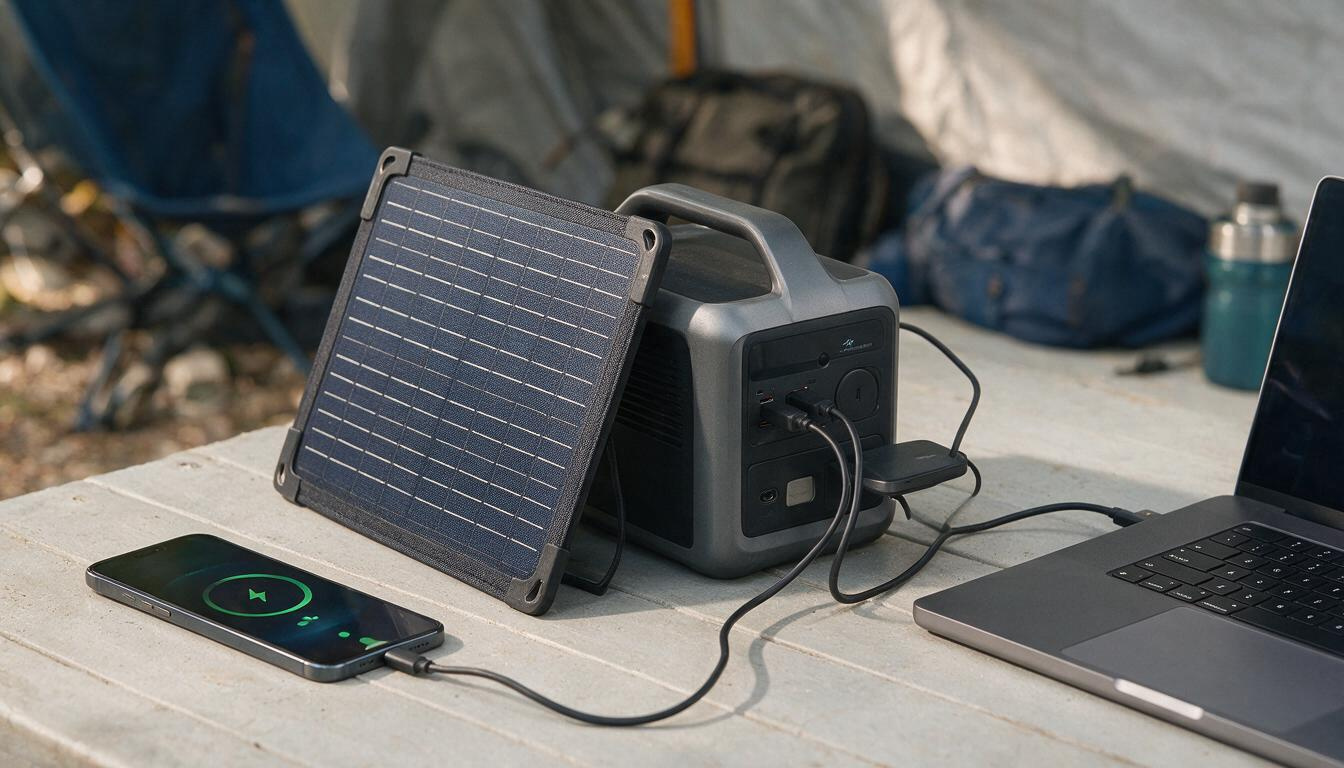
Start with the devices you would miss most. Charging a phone once uses a small share of stored energy. Keeping equipment running for hours takes a larger share of the same battery.
A compatible USB outlet on the battery can top up a phone for calls, messages and updates when a mobile network is available.
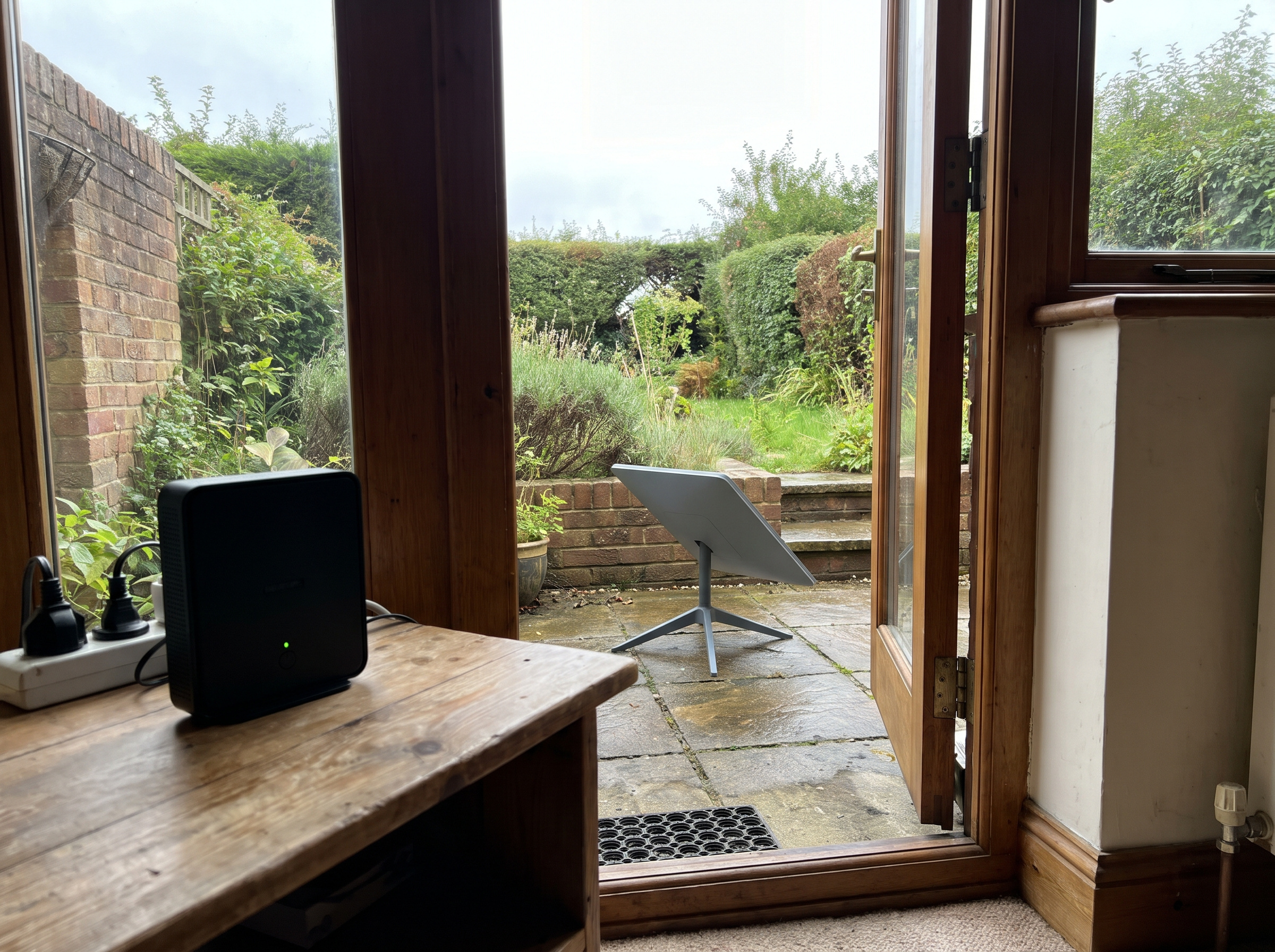
Caregreen plans to offer satellite connectivity. Allow power for both the terminal and router for each hour online. The terminal also needs a clear view of the sky and an active service.

Choose an output that supports your laptop charger. For example, a laptop drawing 45 watts for two hours uses 90 watt-hours, plus any energy lost in charging.
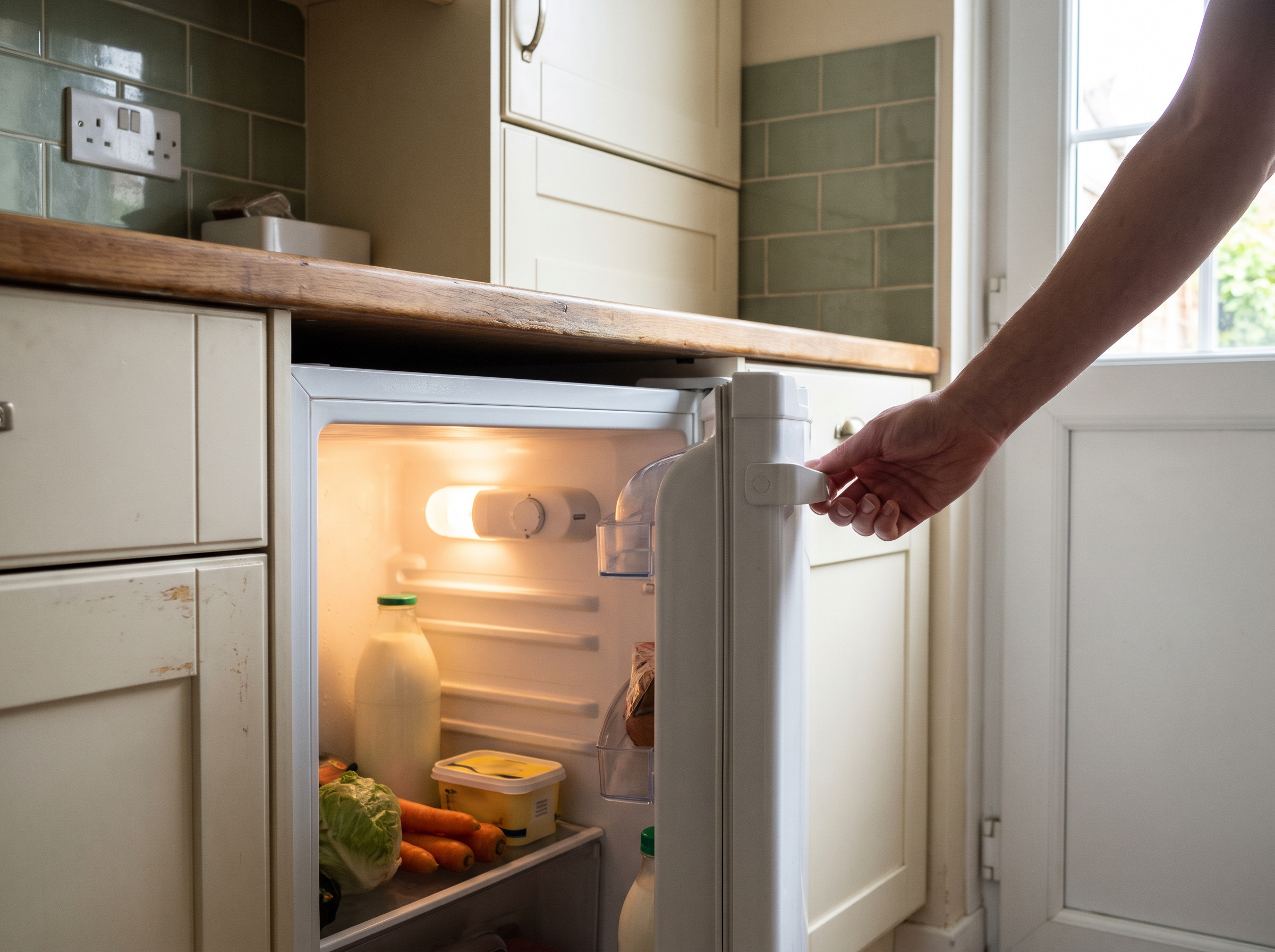
Check the fridge’s daily energy use and the power it needs when its compressor starts. An efficient fridge may be possible if the battery lasts overnight, the output handles start-up and the panel can replace the energy used each day.
The UK government’s Be Ready campaign recommends preparing for three days of disruption. Start with what is already in your cupboards. Choose food your household enjoys and check supplies every six months as needs and expiry dates change.
Set aside bottled water. Allow 3 litres a day for each person to drink.
Keep three days of food you can eat without a fridge or cooker, such as tinned fish, beans, nuts or dried fruit. Keep a tin opener handy.
Include your usual toiletries, hand sanitiser, wet wipes and bathroom supplies.
Keep a torch with spare batteries. Gather blankets, sleeping bags and warm layers for everyone.
Have a wind-up or battery-powered FM radio, a note of local news frequencies and a fully charged power bank.
Keep coins, notes and payment cards. Copy key ID, insurance and medical equipment documents. Write down important numbers, medicines and doses.
Keep a first aid kit, your essential medicines and any medical supplies you use. Plan ahead for repeat prescriptions.
Include nappies and wipes. If you use formula, ready-to-feed formula is preferable when you may be unable to boil water.
Set aside their usual food and bottled drinking water for them too.
Call 999 if anyone is in immediate danger.